
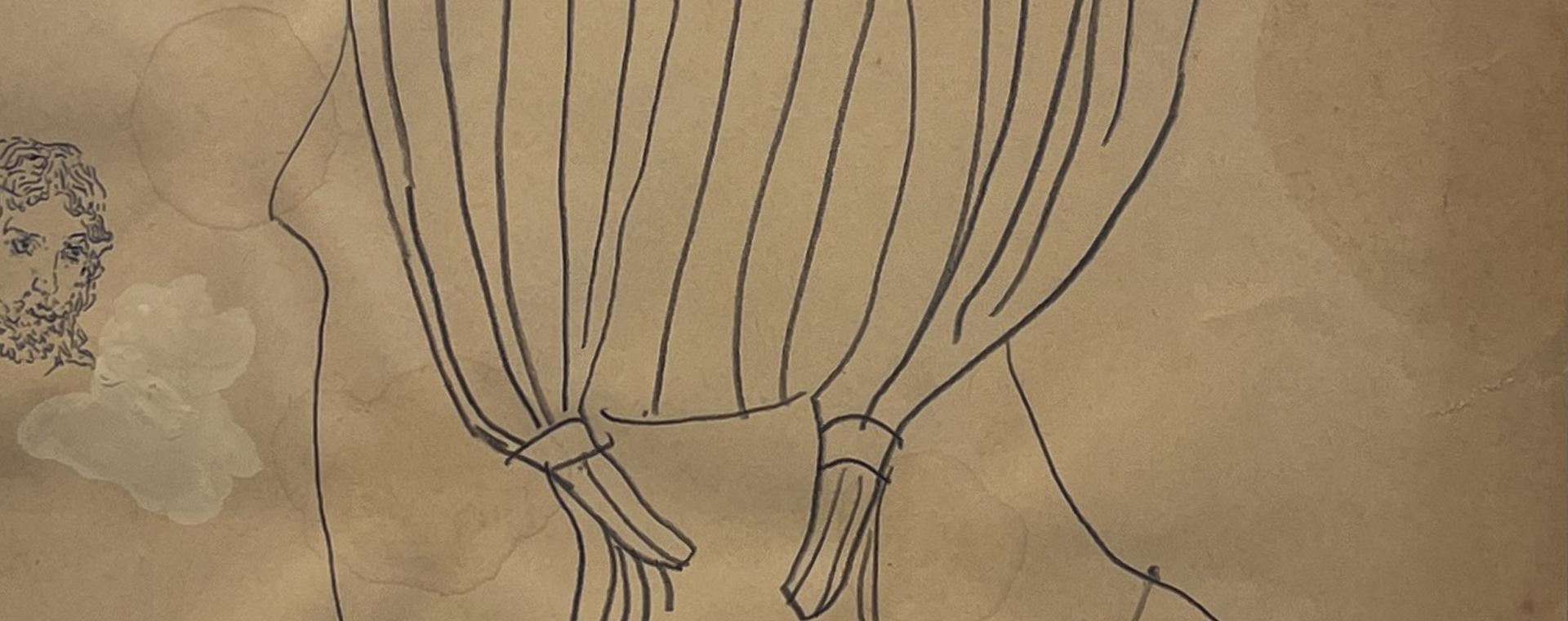
A magazine can remain in a studio for years before the reason for keeping it becomes clear. It occupies a corner, survives a clear-out, returns to view. Eventually, an image that once belonged to a public conversation becomes entangled with a private history. This slow acquisition of significance provides a useful way into Marijn van Kreij’s exhibition Living Together at Pale Horse. Across drawings, paintings and collages, the Dutch artist considers what it means to spend time with images that somebody else has made.
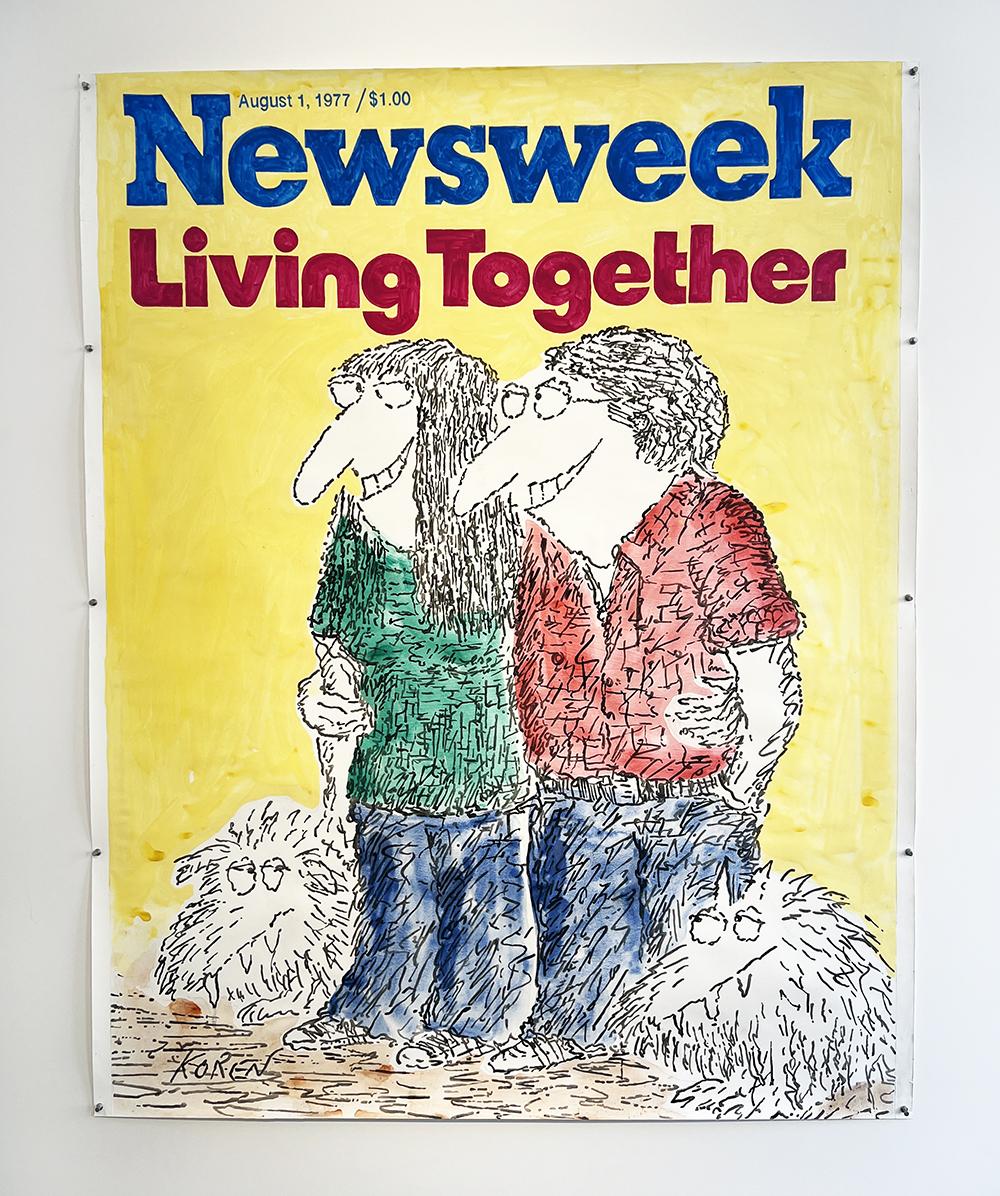
One of the exhibition’s central works returns to a 1977 Newsweek cover illustrated by Edward Koren, carrying the heading “Living Together”. According to the gallery’s accompanying text, the magazine had remained in van Kreij’s studio for years and had already informed a collage made in 2016. Its reappearance gives the exhibition a particular temporal texture. The source belongs to the 1970s, but its subsequent life also includes the artist’s earlier encounter with it. Returning to the magazine means returning, in part, to a previous version of himself.
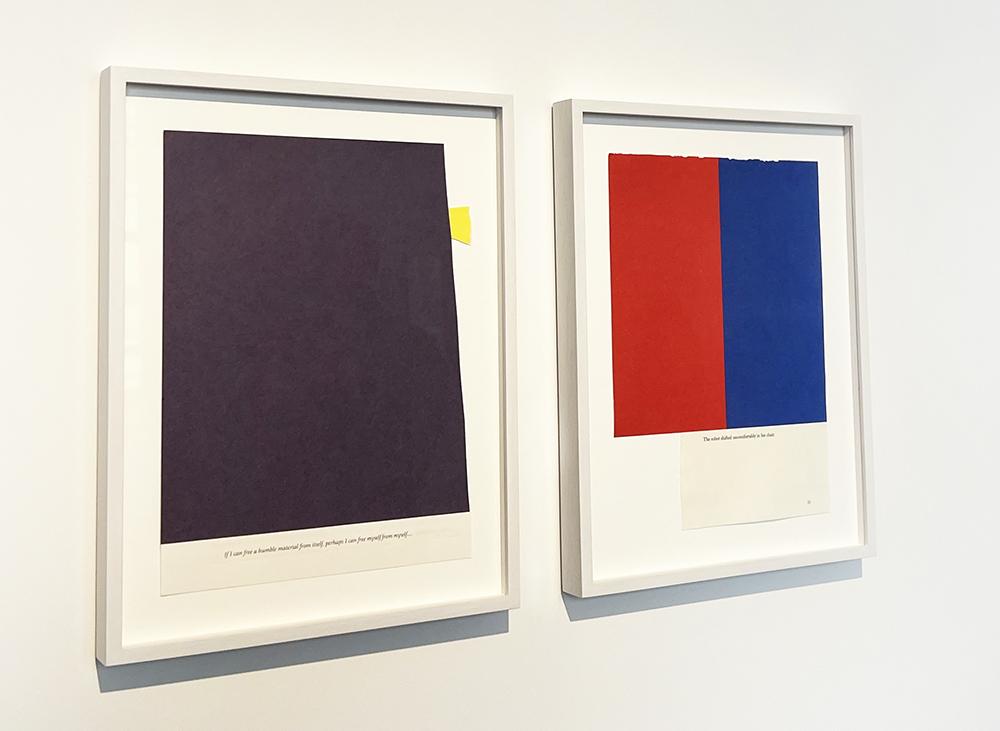
Marijn van Kreij. Living Together, Pale Horse, London, 5 June–18 July 2026
This is where van Kreij’s use of appropriation becomes most interesting. The question of who first produced an image is joined by another: what happens to it through prolonged familiarity? A reproduction can become as personally charged as an object inherited from a relative. Its public availability does little to diminish that attachment. Van Kreij’s copying and recombination give form to the uneasy overlap between cultural material that circulates widely and the highly particular meanings it acquires for one person.
The exhibition’s title makes a persuasive proposition about this relationship. Living with an image implies accommodation, repetition and occasional irritation. It allows for stretches of inattention. The magazine lying in the studio matters partly because it does not demand to be looked at all the time. Against the pressure to register, react and move on, such an extended encounter feels significant. Here, an image can remain unresolved long enough to become useful in an unforeseen way.
Marijn van Kreij. Living Together, Pale Horse, London, 5 June–18 July 2026
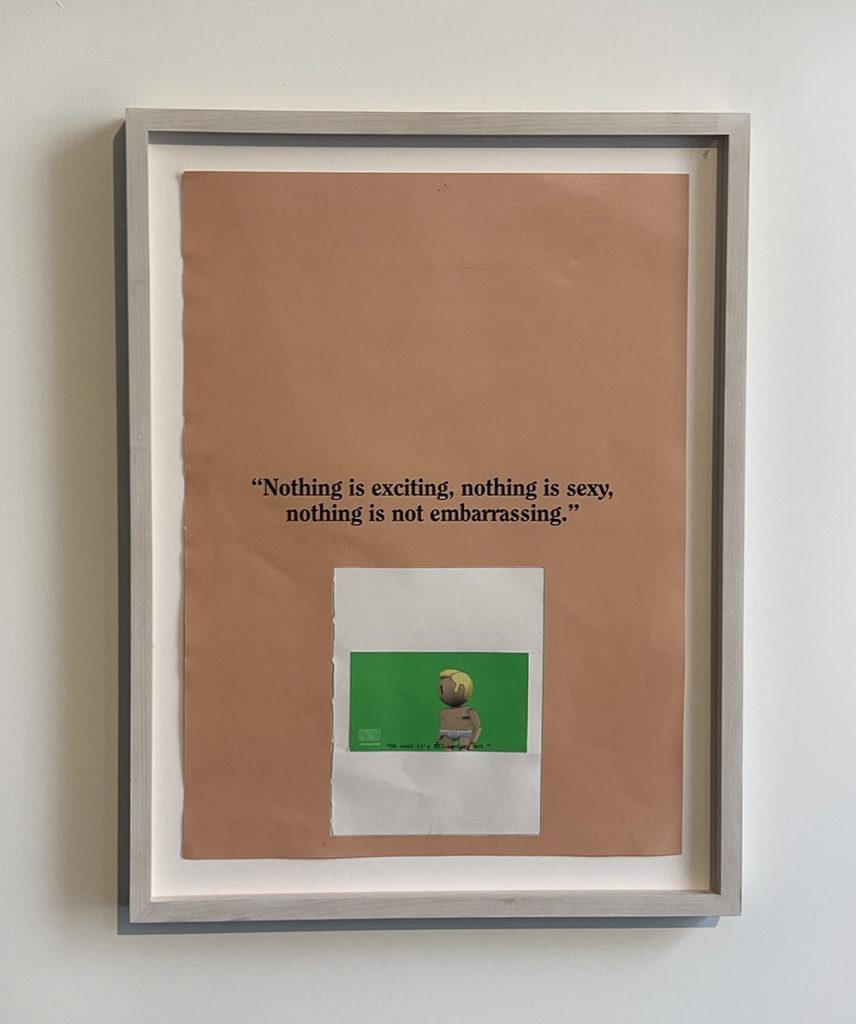
Van Kreij works with fragments of writing, cartoons and reproductions, bringing them into contact through collage and painterly intervention. These materials arrive with different expectations attached. A cartoon invites a quick reading; a literary quotation asks for reflection; an art reproduction carries the authority of its original. Placing them together disturbs those habits. A phrase may direct the interpretation of an image, while the image can make the phrase seem unexpectedly awkward or funny. Meaning depends on the company each fragment keeps.
Yet “living together” is also a generous description of a relationship in which the artist retains considerable control. He chooses the guests and arranges the conversation. This complicates the gallery’s account of authorship as coexistence: borrowed voices may remain recognisable, but their meeting takes place on van Kreij’s terms. The tension gives the work more substance than a straightforward celebration of shared creativity would allow. Affection for an image does not cancel the power involved in selecting, altering and displaying it.
Marijn van Kreij. Living Together, Pale Horse, London, 5 June–18 July 2026
There is a related risk in work built from cultural references. Recognition can become its own reward, offering the informed viewer the pleasure of belonging to the conversation. The critical test is whether a juxtaposition can sustain attention before its sources have been identified. Van Kreij’s combination of verbal and visual fragments makes that question central to the exhibition. How much of an encounter is available immediately, and how much depends on knowledge brought from elsewhere?
Living Together is most compelling when understood through the persistence of particular images. Why this cover, this sentence, this fragment, after so many years? The exhibition suggests that artistic judgement unfolds through repeated encounters, including those whose importance is initially obscure. In a culture that makes images easy to acquire and easy to discard, van Kreij gives weight to the less conspicuous decision to keep one around.
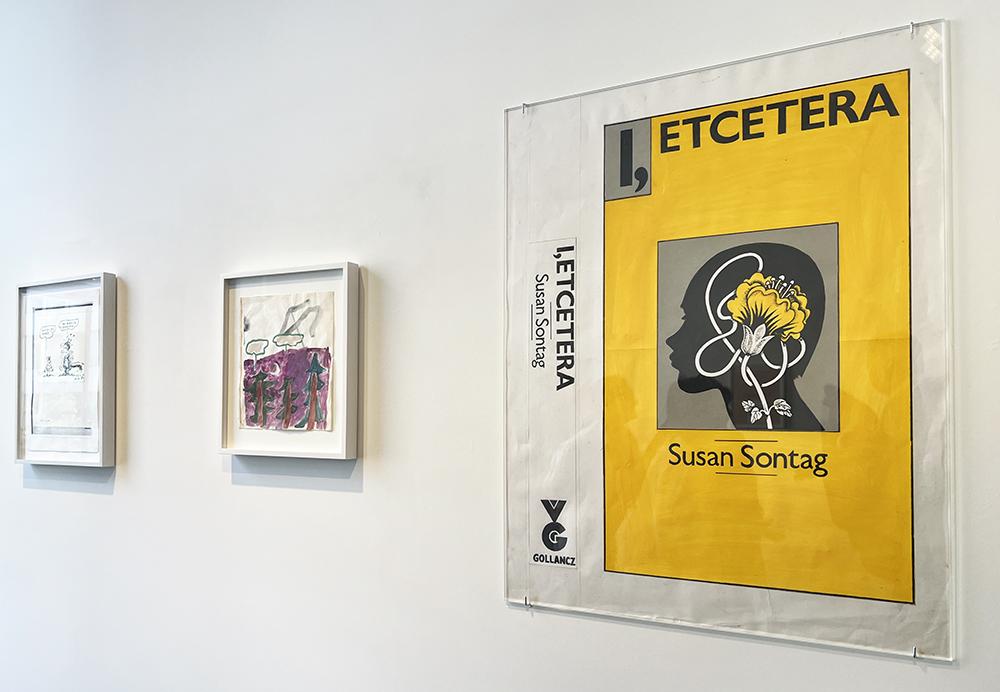
Marijn van Kreij. Living Together, Pale Horse, London, 5 June–18 July 2026
Author: Vladimir Logutov , artist, curator, writer on contemporary art


