
Every October, London temporarily becomes the centre of the global art economy. Collectors, artists, curators, institutions and cultural producers gather in Regent’s Park for Frieze London, an event that operates simultaneously as an exhibition, marketplace, social ritual and a mechanism for producing artistic value. Yet beyond its commercial structure, Frieze has become a space where contemporary art reflects the anxieties, contradictions and transformations of the present moment.
The 2025 edition brought together more than 160 galleries from around the world, presenting artists whose practices challenge conventional categories of painting, sculpture, installation and social engagement. Rather than revealing a single dominant aesthetic, Frieze London 2025 presented a fragmented landscape where memory, identity, technology, material experimentation and collective histories intersected. The most compelling works were often those that resisted immediate consumption, demanding time, attention and a slower form of looking.
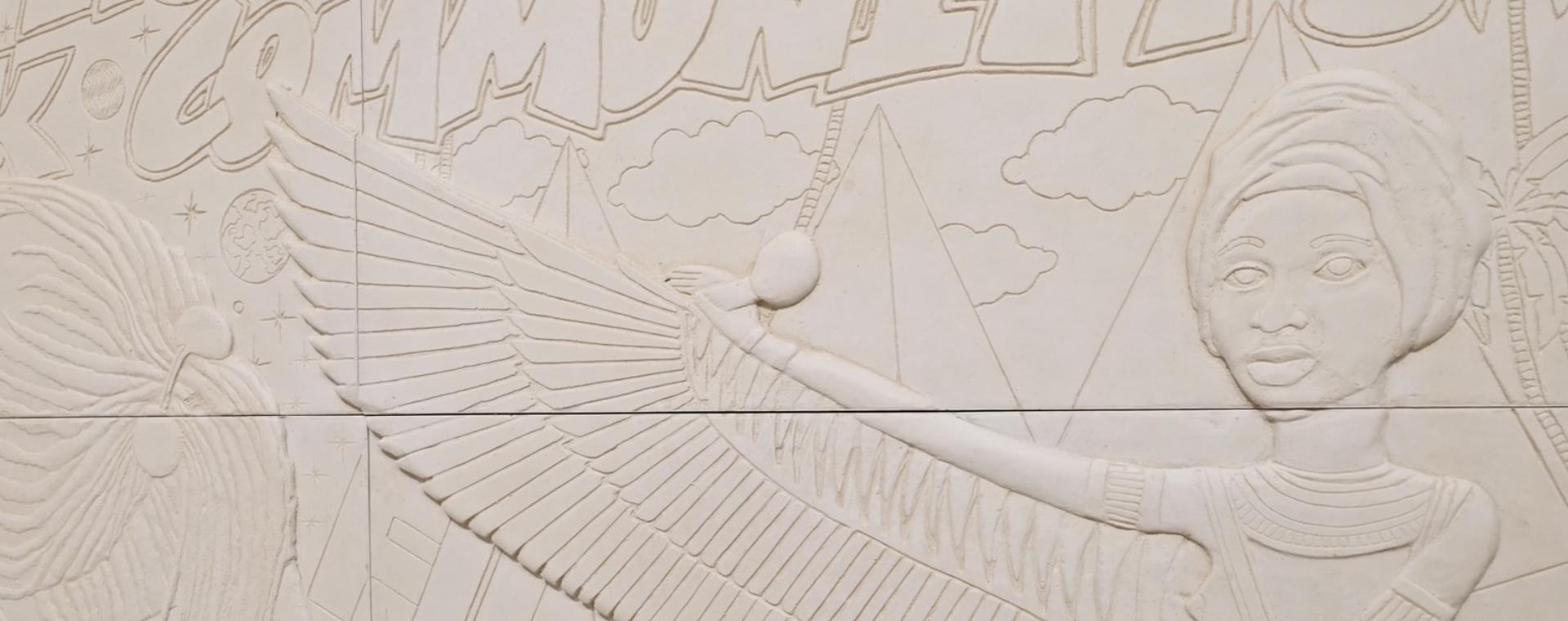
One of the strongest presentations came from Gagosian, which dedicated its booth to Los Angeles based artist Lauren Halsey. Known for her Afrofuturist installations and sculptural environments, Halsey transforms the visual language of South Central Los Angeles, including street signs, architecture, popular culture and community symbols, into immersive worlds where history and speculative futures coexist. Her practice challenges the traditional relationship between monument and marginalised communities. Instead of monumentalising individuals through conventional forms of sculpture, Halsey creates monuments to collective identity, neighbourhood memory and everyday cultural production.
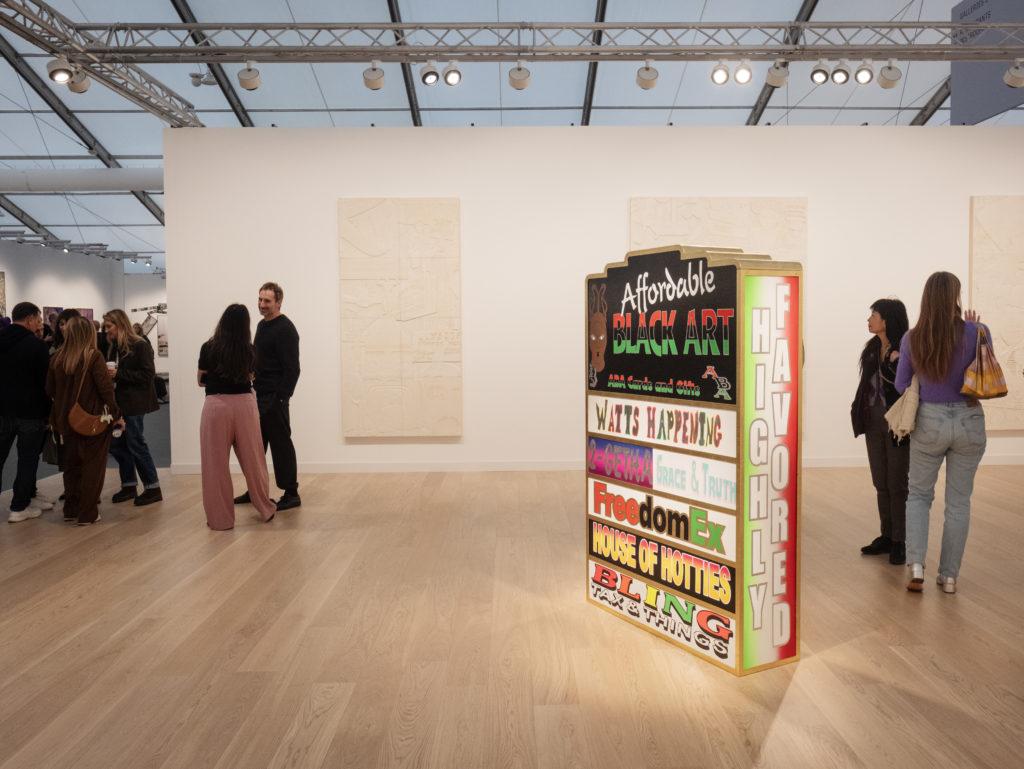
Gagosian, Frieze London 2025. Photo by Linda Nylind. Courtesy of Frieze
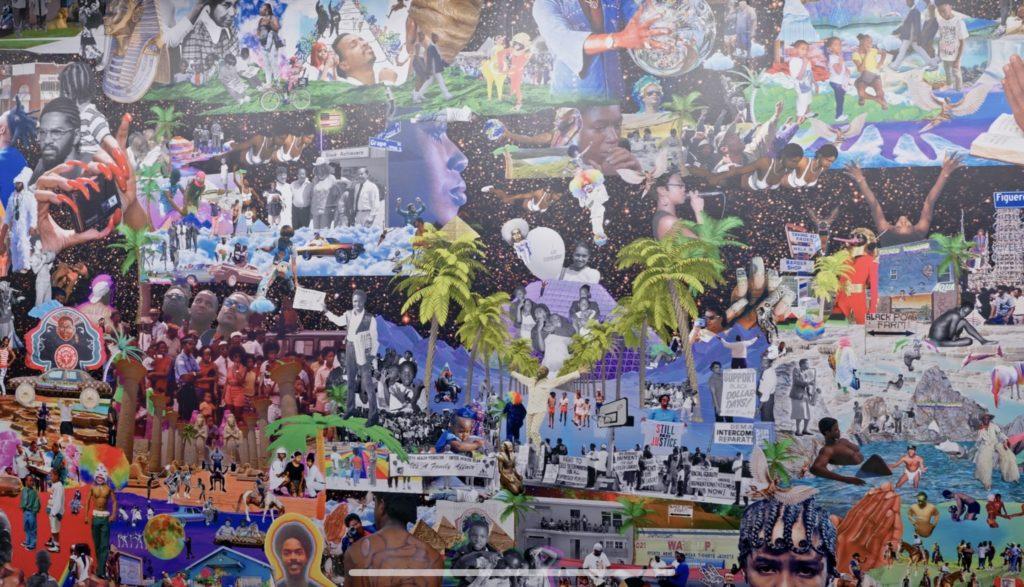
Lauren Halsey. Installation view, Gagosian, Frieze London 2025 © Photo courtesy of Cucumber Magazine / Vladimir Logutov
At Lehmann Maupin, Korean artist Do Ho Suh continued his long investigation into memory, displacement and the emotional architecture of home. His fragile architectural sculptures recreate domestic spaces through translucent materials, transforming rooms, corridors and thresholds into representations of memory. Suh’s work is particularly resonant in a contemporary culture defined by migration and increasingly fluid ideas of belonging. His architecture is simultaneously physical and psychological, suggesting that home is not necessarily a fixed location but a collection of memories, gestures and emotional connections.
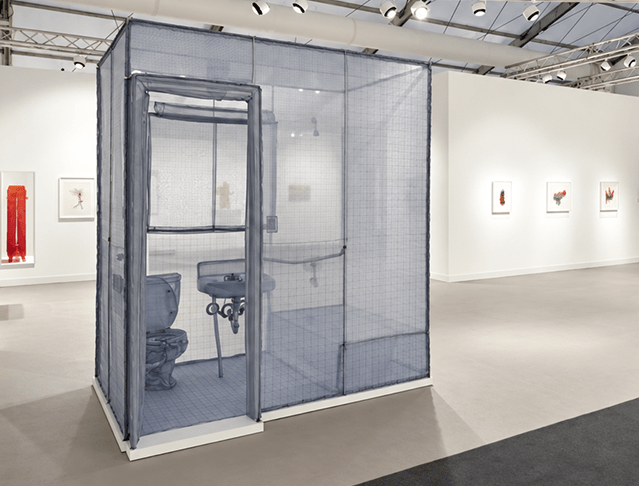
Do Ho Suh. Installation view, Lehmann Maupin, Booth C13, Frieze London 2025 © Photo courtesy of Cucumber Magazine / Vladimir Logutov
The politics of the body and representation appeared in the presentation of Alex Margo Arden at Ginny on Frederick. Arden’s sculptural installations transform discarded mannequins and commercial objects into unsettling reflections on the history of looking and the construction of femininity. The mannequin, originally designed to present an idealised body while remaining empty of identity, becomes a ghostly figure. It suggests a wider question that repeatedly emerged across the fair: who is allowed to look, who is being looked at and who controls the image?
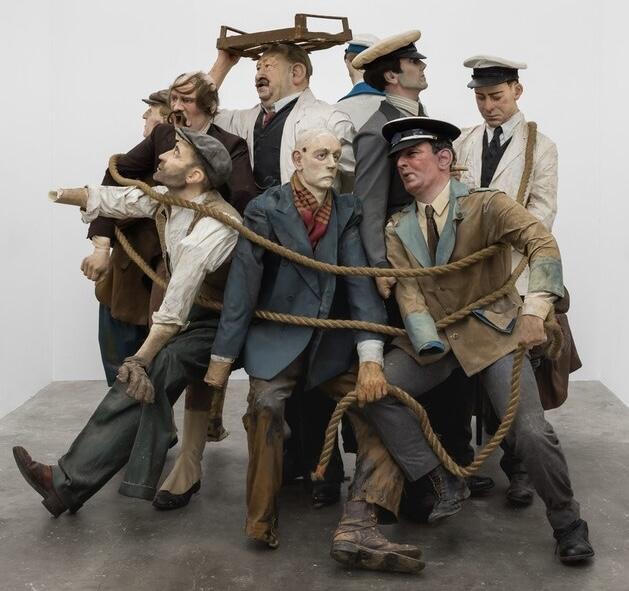
Alex Margo Arden. Accounts, 2025. Rescued museum mannequins and tug of war rope
Ginny on Frederick, Frieze London 2025 © Photo courtesy of Cucumber Magazine / Vladimir Logutov
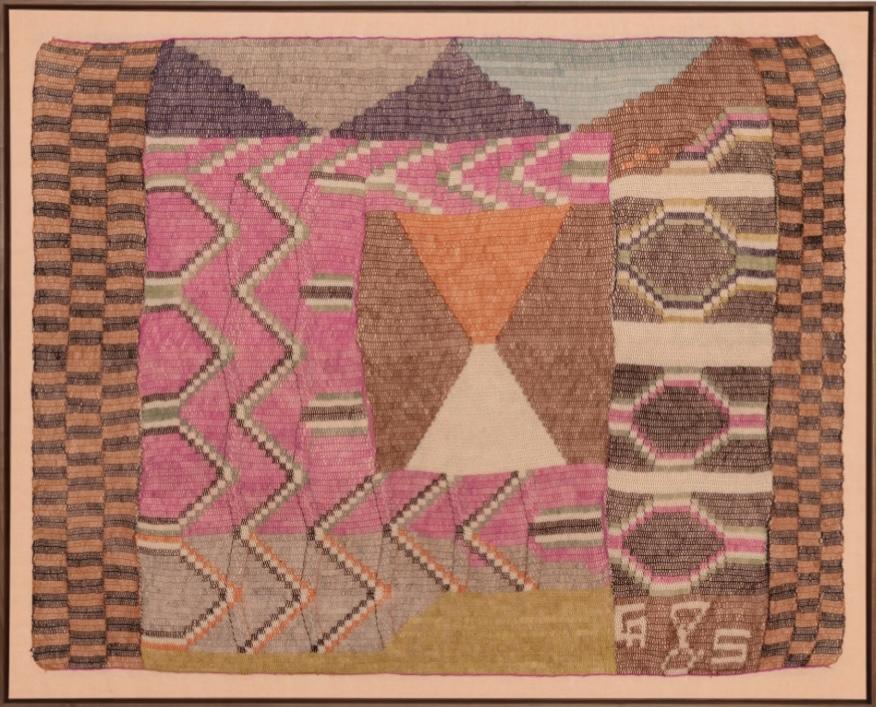
Claudia Alarcón & Silät. El encuentro de las memorias [Meeting of Memories], 2024. Hand-spun chaguar fibre, woven in yica stitch
148 × 152 cm. Cecilia Brunson Projects, Frieze London 2025
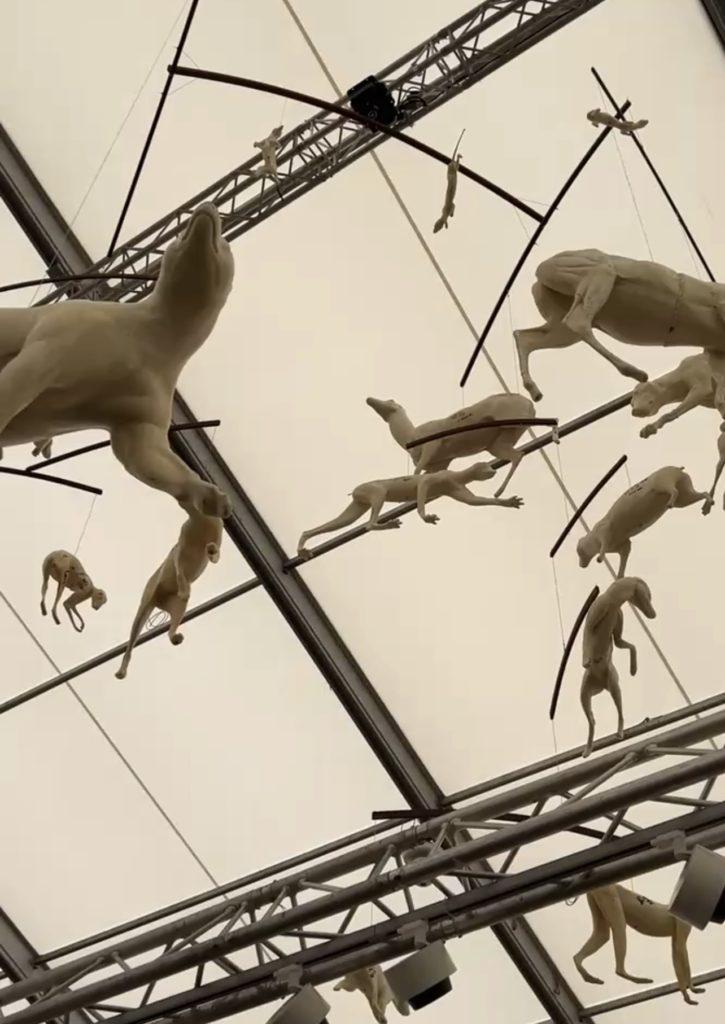
Seventeen Gallery. Installation view, Frieze London 2025 © Photo courtesy of Cucumber Magazine / Vladimir Logutov
Materiality became another important current throughout the fair. Cecilia Brunson Projects presented works by Claudia Alarcón and the Silät collective, whose textile practices are rooted in Indigenous Wichí communities in Argentina. Their works transform weaving into a living archive, preserving ancestral knowledge while challenging conventional hierarchies between craft and contemporary art. Similarly, Antonio Pichillá Quiacaín’s presentation at Portas Vilaseca explored Indigenous Maya Tz’utujil traditions through textiles, sculpture and video. In both cases, material becomes a carrier of cultural memory rather than simply a formal choice.
Another significant presentation came from Sadie Coles HQ, one of London’s most influential contemporary galleries, whose booth brought together a diverse group of artists representing different generations and artistic approaches. Rather than focusing on a single visual language, the presentation reflected the breadth of the gallery’s programme, creating a dialogue between painting, sculpture, installation and conceptual practices. Artists including Ryan Sullivan, Sarah Lucas, Helen Marten, Arthur Jafa and Alvaro Barrington demonstrated the gallery’s ongoing interest in artists who challenge traditional boundaries between image, object and experience.
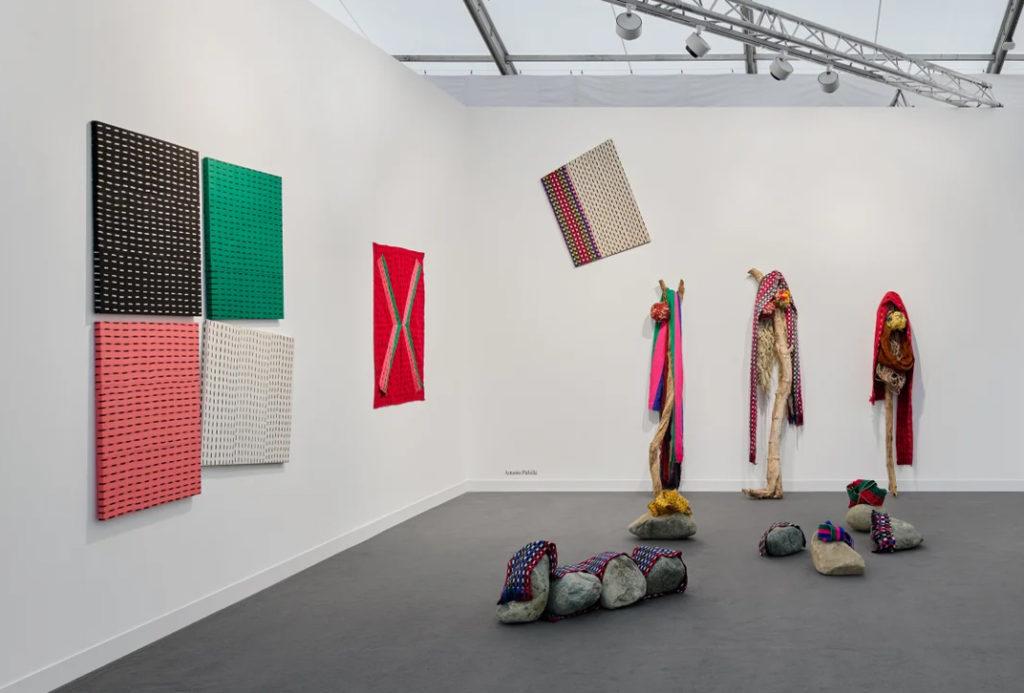
Antonio Pichillá Quiacaínю Installation view, Portas Vilaseca, Frieze London 2025 © Photo courtesy of Cucumber Magazine / Vladimir Logutov
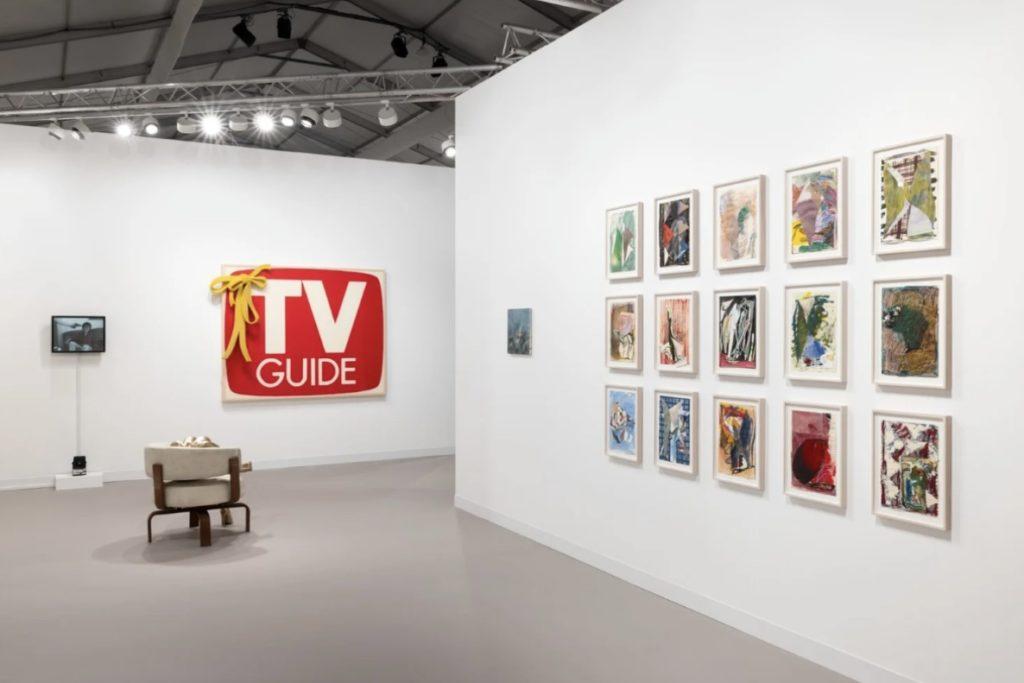
Sadie Coles HQ. Installation view, Booth D13, Frieze London 2025 © The Artist/s. Courtesy the Artist/s and Sadie Coles HQ, London. Photo: Andrea Rossetti
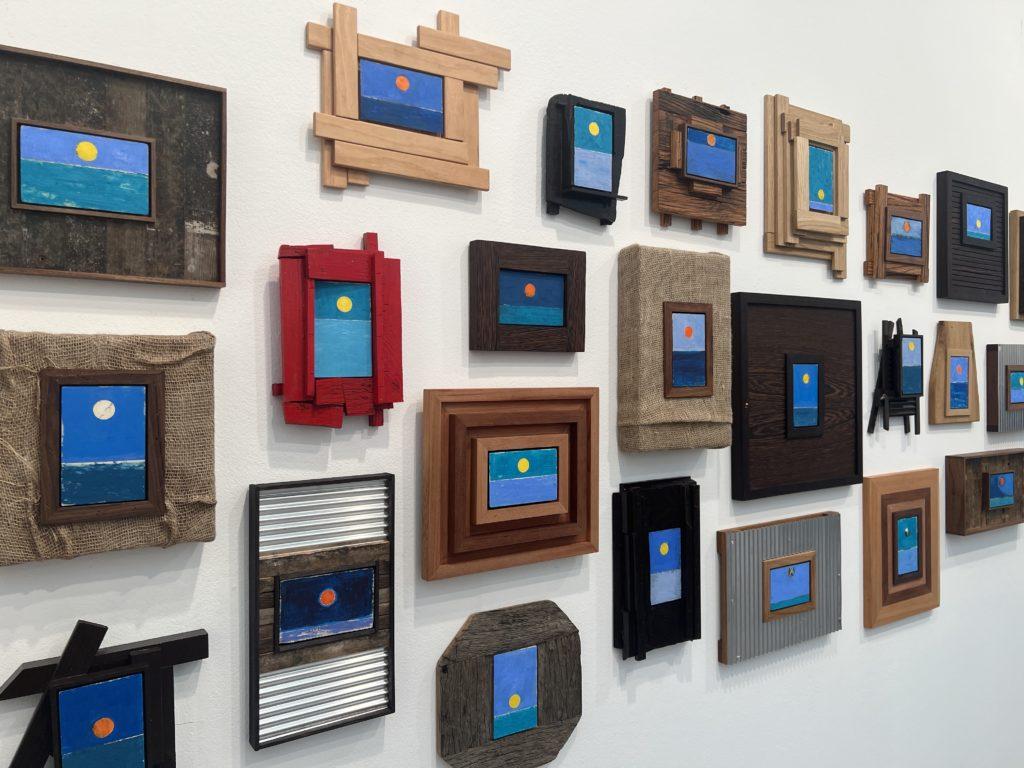
Sadie Coles HQ. Installation view, Booth D13, Frieze London 2025. © Photo courtesy of Cucumber Magazine / Vladimir Logutov
Among the highlights were Ryan Sullivan’s paintings, which occupy an uncertain space between painting and sculpture. Built through layers of paint, wax, resin and other materials, his surfaces appear almost geological, as though the image has been excavated rather than painted. At Frieze London 2025, Sullivan’s works introduced a distinctly physical dimension to the fair, resisting the speed of visual consumption that often defines an art market environment. Their dense surfaces suggest landscapes, fragments of bodies or unstable forms without ever settling into a recognisable subject. Sullivan’s paintings are less concerned with representation than transformation, exploring what happens when an image becomes an object and when a painting refuses to reveal itself immediately.
This insistence on material presence continued in the work of Alvaro Barrington, presented by Emalin. His Stop Drop Open Up Shop N0924, Outside (2025) combines everyday materials including yarn, concrete, fabric and found objects. Barrington often transforms familiar materials into spaces of social connection, reflecting histories of migration, community and informal economies. The work demonstrates how contemporary painting and sculpture can operate beyond the autonomous object, becoming connected to specific social environments and lived experience.
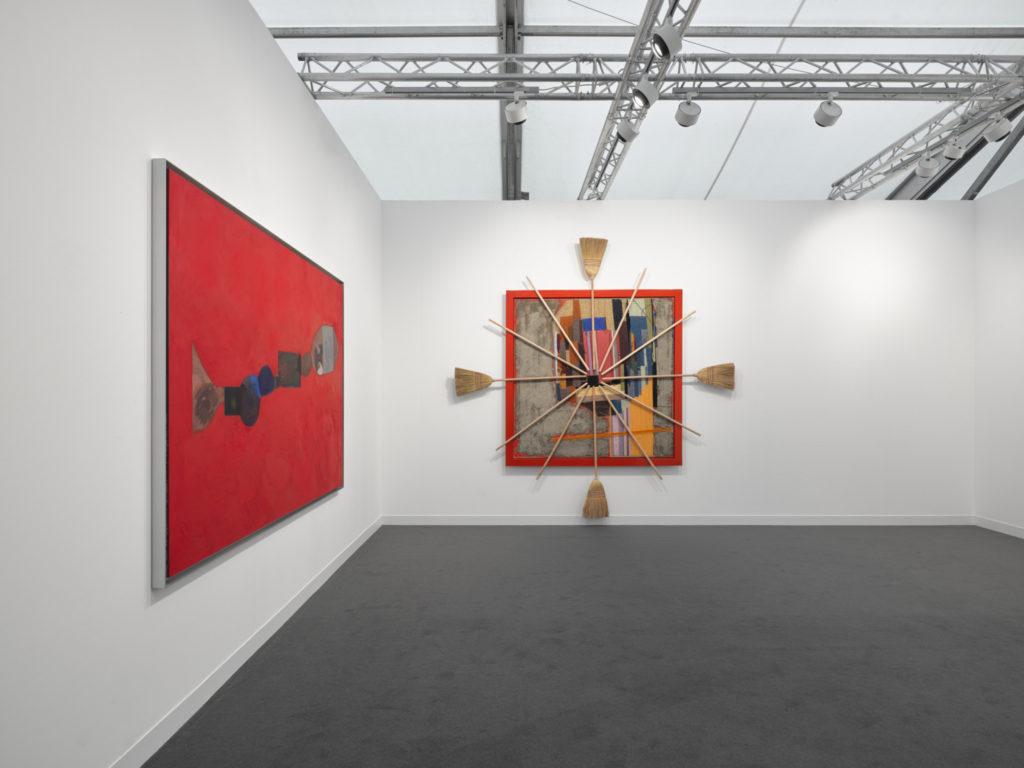
Alvaro Barrington. Instalation view. Emalin, Frieze London 2025 © Photo courtesy of Cucumber Magazine / Vladimir Logutov
The presence of Sadie Coles HQ also demonstrated how Frieze Week extends beyond the fair itself. During the week, the gallery presented Arthur Jafa’s GLAS NEGUS SUPREME at its Kingly Street space, while its new six storey gallery on Savile Row opened with Lisa Brice’s Keep Your Powder Dry. Together, these exhibitions demonstrated the wider ecosystem surrounding Frieze. The fair functions as a gravitational centre, while London’s galleries create a parallel network of exhibitions, encounters and forms of cultural value throughout the city.
This is perhaps the central paradox of Frieze London. The fair celebrates experimentation while operating within a highly commercial environment. It promotes critical practices while simultaneously transforming artworks into commodities and financial assets. Yet this contradiction is precisely what makes the fair such a revealing portrait of contemporary art.
The most interesting works at Frieze London 2025 were not necessarily the loudest or most spectacular. They were works that created moments of uncertainty and demanded a different relationship with looking. Across painting, sculpture, textiles, installation and moving image, artists repeatedly returned to questions of memory, embodiment, belonging and material presence.
In an era defined by digital saturation, algorithmic images and accelerated consumption, this return to physicality feels significant. The artwork becomes more than an image to be seen and evaluated. It becomes a surface, a body, a memory, a place or an encounter.
Perhaps the most valuable thing Frieze London 2025 offered was not another image, but a reminder of the difficulty of truly looking at one.
Author: Nata Yanchur, artist, curator, writer on contemporary art, co-founder of the CucumberMag


